
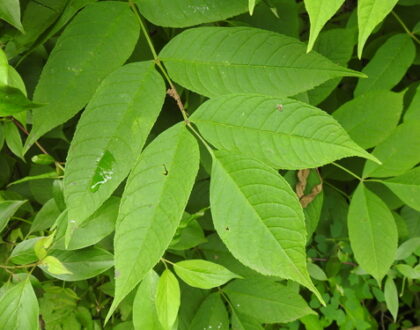
Fraxinus nigra
Black Ash
 Please register or login to build your personal plant list.
Black ash (Fraxinus nigra) is a medium-sized, dioecious tree of swamps, seeps, and floodplain forests across northeastern North America.
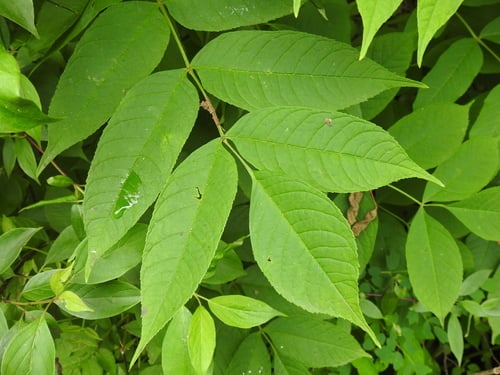
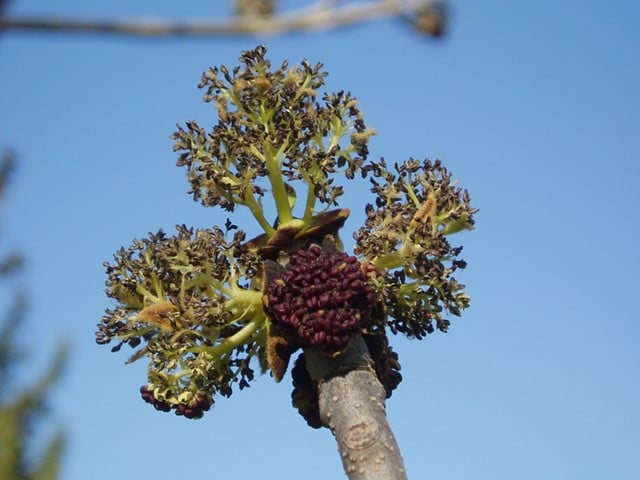
Description:
Black ash is a medium-sized, dioecious tree in the olive family (Oleaceae), native from Newfoundland and northern Virginia west to Indiana and North Dakota, and recorded as native throughout New Jersey, though most frequent in the north. The common name comes from its nearly black winter buds and dark inner bark. It grows in peat, muck, and other poorly drained organic soils along streams, bogs, and seeps that are often seasonally flooded, and it tolerates sandy loams where moisture stays reliable. It performs in full sun to part shade across a wide pH range. Its crown is open, narrow, and pyramidal, with branches that tend upward rather than spread outward as in white ash, and it typically reaches 40 to 65 feet. The small, petal-less, wind-pollinated flowers offer little to pollinators, though the tree hosts ash-feeding moth larvae, such as the Ash sphinx (Manduca jasminearum), and provides seed and cover for birds.
The overriding concern is emerald ash borer (Agrilus planipennis), first detected in Michigan in 2002 and now established across most of the Northeast, including New Jersey. Its larvae feed in the cambium, effectively girdling the tree, and mortality in infested stands approaches 100 percent for mature ash. Black ash is among the most vulnerable species because its wetland habitats concentrate trees in dense, even-aged stands that the beetle spreads through quickly, and because those same saturated soils make chemical and biological control harder to apply.
The loss is cultural as well as ecological: black ash wood splits readily into thin strips and has long been used for basket making, barrel hoops, woven chair seats, and canoe ribs, and that tradition is now threatened along with the tree.
At the moment, Black Ash is a species of conservation concern rather than a recommended planting. New plantings are inadvisable where emerald ash borers are present, and existing trees warrant monitoring and, where appropriate, protective treatment.
Plant information adapted from the North Carolina Extension Gardener Plant Toolbox and USDA APHIS, Emerald Ash Borer program
Plant Details:
Plant Type: Tree
New Jersey Native: Yes
Bloom Times: Spring
Bloom Colors: Green, Purple
Deer Resistance: Some
Attracts Pollinators and Wildlife: Birds
Salt Tolerance: Low to None
Hardiness Zone: 6a, 6b, 7a, 7b
Physiographic Region: All Regions in NJ
Soil Characteristics
Soil Type: Loam, Organic, Sandy, Clay
Soil Moisture: Moist, Wet
Soil pH: Acidic, Slightly Acidic, Neutral
Light Needs of Plant
Optimal Light: Full Sun
Light Range: Full Sun, Partial Shade
Water Needs of Plant
Soil Moisture: Moist, Wet
Drought Tolerance: Low
Size and Growth Rate
Height: 40 - 65 ft
Spread: 20 - 35 ft
Growth Rate: Slow